
Next-Generation Humanoid Robotics: Actuators, Vision-Language-Action, and Spatial Intelligence
Inside the mechanical and algorithmic breakthroughs turning general-purpose bipedal robots from lab demos into manufacturing realities.

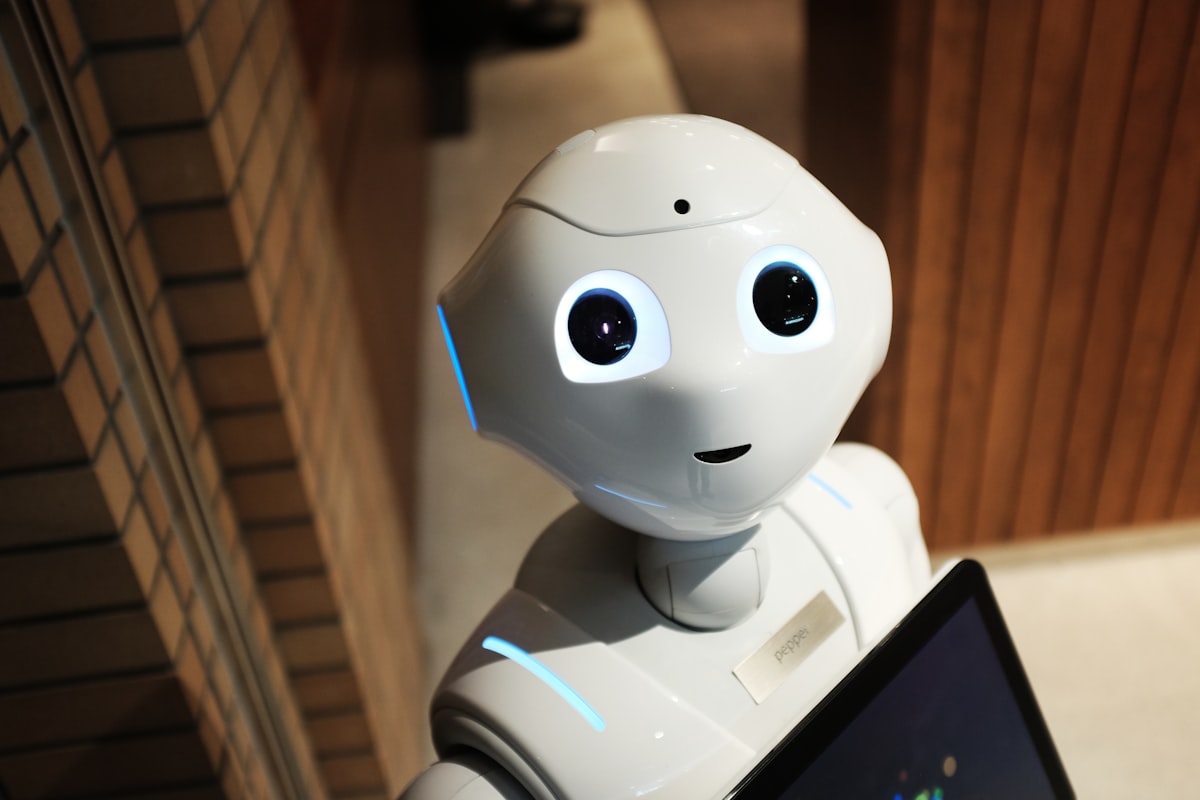
Rotary and Linear Actuator Efficiency
The historic bottleneck of humanoid robotics has been mechanical efficiency: high torque density without catastrophic thermal overheating. Recent breakthroughs in planetary gearing, quasi-direct drive (QDD) brushless motors, and strain-gauge force sensing have radically lowered the cost and weight of humanoid limbs.
Modern actuators achieve sub-millisecond impedance control, enabling robots to absorb unexpected impacts safely—a prerequisite for co-existing with human coworkers on assembly lines.
Sim-to-Real Transfer & Physics Simulation
Physical robots are expensive to break. The real catalyst for humanoid dexterity is massive parallel simulation. Using GPU-accelerated physics engines, robots train for equivalent millennia in virtual worlds:
Once zero-shot policies are trained in simulation, domain randomization ensures they transfer smoothly into physical reality without manual recalibration.
Vision-Language-Action (VLA) Architecture
Rather than separating vision pipelines from motor controllers, unified VLA networks process raw RGB-D camera streams and natural language instructions directly into joint torque trajectories:
$$\tau_t = \pi_\theta(\mathbf{I}_t, \mathbf{S}_t, \mathbf{prompt})$$
Where $\mathbf{I}_t$ represents visual frames, $\mathbf{S}_t$ represents proprioceptive joint angles, and $\tau_t$ represents output joint targets. This end-to-end learning permits complex semantic tasks: "Sort the defective metallic cylinders into the blue container" requires zero hardcoded coordinate programming.
From Structured Factories to Unstructured Homes
While early commercial deployments center on automotive factories and logistics warehouses, the long-term objective is human assistance in hospitals, care facilities, and homes. The marriage of advanced mechanics, tactile fingertip sensors, and spatial reasoning models marks the dawn of true general-purpose robotics.